
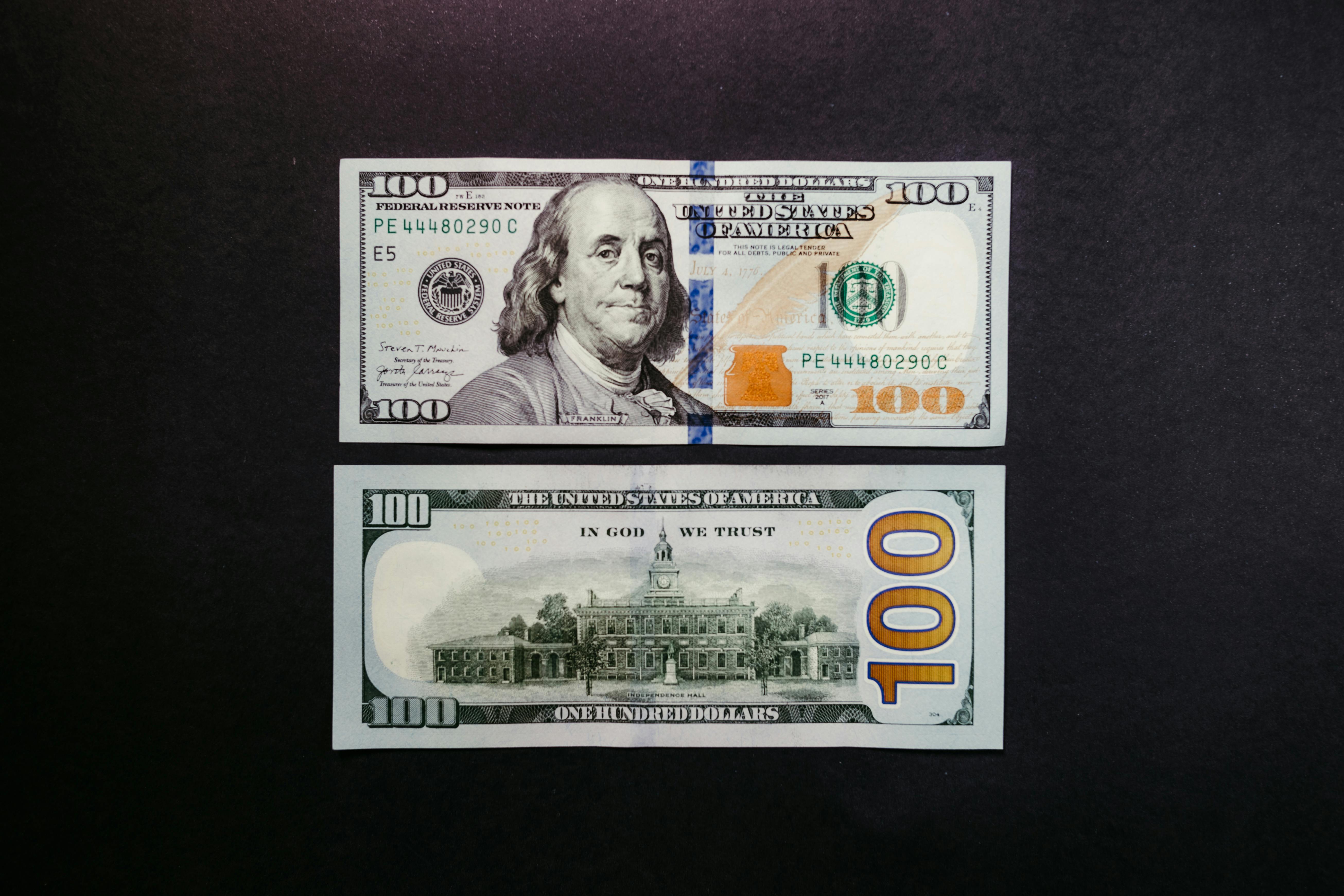
Your life savings are being silently siphoned away, not by a hacker, but by a hidden mechanism embedded deep within the global financial system. A trillion-dollar 'loophole' that has just triggered seismic shifts across economies, leaving ordinary Americans confused, poorer, and desperately searching for answers. They don't want you to know about it, because their wealth depends on your ignorance. But the truth is finally bubbling to the surface, and understanding it is your only defense against the financial storm that's already here.
🔥 What's Happening Right Now
The air is thick with uncertainty. Every trip to the grocery store feels like a punch to the gut. Gas prices fluctuate wildly. Housing remains stubbornly out of reach for many. And while politicians and pundits offer various explanations – supply chain issues, geopolitical conflicts, post-pandemic demand – a far more insidious force is at play. We're talking about a multi-trillion-dollar 'loophole' that isn't a glitch, but a feature of modern finance, meticulously crafted over decades, now reaching its destructive zenith.
This "loophole" isn't a single, easily identifiable flaw. Instead, it's a complex interplay of interconnected financial policies and market structures that have quietly rigged the game in favor of a select few, while simultaneously eroding the purchasing power and stability of the vast majority. At its core lies the unchecked expansion of global liquidity, fueled by central bank policies like quantitative easing (QE) and near-zero interest rates for over a decade. While presented as necessary measures to stimulate growth and prevent economic collapse, these actions had a profound, hidden consequence: they flooded the financial system with cheap money.
This torrent of liquidity didn't primarily flow into productive investments that create jobs or innovative technologies for the average person. Instead, it inflated asset bubbles in stocks, bonds, and real estate, disproportionately benefiting those who already owned these assets. The wealthy saw their portfolios swell, while the middle class, often with most of their wealth tied to wages and modest savings, were left behind. This wasn't an accident; it was a predictable outcome of a system designed to pump capital into financial markets, not Main Street.
The "blew up the global economy" aspect comes from the inevitable reckoning. When central banks finally began to reverse course, raising interest rates to combat the rampant inflation that their own policies had unleashed, the house of cards began to wobble. Suddenly, the cheap money that fueled speculative growth vanished. Businesses that relied on easy credit struggled. Banks, overexposed to long-duration assets that plummeted in value, faced existential crises (think regional bank failures that rattled confidence). And global supply chains, already fragile, buckled under the weight of higher borrowing costs and reduced demand.
But here's the kicker, the "why you're not being told" part: the very institutions that benefit from this system – the mega-banks, the hedge funds, the corporations leveraging cheap debt for buybacks, and even governments who can print their way out of fiscal woes – have a vested interest in keeping the mechanisms opaque. They frame inflation as an external phenomenon, a consequence of 'greed' or 'foreign conflicts,' rather than the direct result of their own monetary policies and the financial engineering that has created this trillion-dollar wealth transfer mechanism. The narrative is carefully controlled, designed to deflect blame and maintain the illusion of a stable, fair economic system, even as your everyday life becomes increasingly unaffordable.
The 'loophole' is, in essence, the ability of a privileged few to create and control money and credit, directing its flow to inflate their own assets while devaluing the labor and savings of everyone else. It's the silent tax of inflation, the hidden erosion of your purchasing power, and the systemic advantage granted to financial capital over human capital. And right now, its full, devastating impact is becoming undeniable.
💡 Financial Impact
The consequences of this trillion-dollar 'loophole' are not theoretical; they are manifesting in your daily life, stripping away your financial security and redefining the American dream. For the average household, the impact is nothing short of catastrophic over time.
First and foremost, there's the relentless assault of **inflation**. Your paycheck might look the same, or even slightly higher, but its purchasing power is shrinking at an alarming rate. The cost of essential goods – groceries, gasoline, utilities – has surged, turning basic necessities into luxuries. Families are forced to make impossible choices, cutting back on healthcare, education, or even adequate nutrition just to keep pace. This isn't just an inconvenience; it's a fundamental erosion of living standards, a silent transfer of wealth from your wallet to the coffers of those who benefit from asset inflation.
Then consider your **savings**. For decades, the advice was simple: save diligently, put money in the bank, and watch it grow. But in an era where inflation routinely outpaces interest rates on traditional savings accounts, your hard-earned cash is effectively losing value every single day. A dollar saved today is worth less tomorrow. This disincentivizes saving, pushing individuals towards riskier investments they may not understand, or worse, leaving them with no safety net at all. The 'loophole' ensures that holding cash is a losing proposition, forcing you into a rigged game.
The impact on **retirement funds** is particularly terrifying. Many Americans rely on 401(k)s and IRAs, often invested in a traditional mix of stocks and bonds. While stock markets have seen periods of rapid growth, much of that was speculative, fueled by cheap money. When the 'loophole' begins to unravel, as it is now, these inflated assets become vulnerable. Market corrections, combined with ongoing inflation, create a double whammy: your nest egg shrinks in nominal terms, and the remaining value buys significantly less. The dream of a comfortable retirement, built on decades of hard work, is being systematically undermined.
Furthermore, the 'loophole' exacerbates **wealth inequality** to unprecedented levels. Those at the very top, with vast portfolios of stocks, real estate, and other financial assets, saw their net worth skyrocket during periods of monetary expansion. They benefit from the asset bubbles. Meanwhile, the middle and lower classes, who primarily rely on wages, find their income stagnating relative to the cost of living. The gap between the "haves" and "have-nots" widens, creating social and economic instability. This isn't just about fairness; it's about the very fabric of society fraying under the strain of an increasingly unjust distribution of wealth.
Finally, there's the insidious effect on **debt**. While inflation can theoretically reduce the real value of fixed-rate debt, the flip side is that new debt becomes far more expensive as interest rates rise. Mortgages, car loans, and credit card debt become heavier burdens, trapping individuals and families in a cycle of repayment that consumes an ever-larger portion of their income. The promise of homeownership, once a cornerstone of the American dream, is becoming a distant fantasy for many, as rising interest rates and inflated housing prices create an insurmountable barrier.
This isn't just an economic downturn; it's a systemic recalibration, designed to funnel wealth upwards, silently and without fanfare. The 'loophole' ensures that the rules of the game are set by those who profit most from its hidden mechanisms, leaving you to bear the brunt of the consequences.
💰 Best Options in Comparison
In a world where traditional savings are eroding and the global economy feels increasingly volatile, relying on old strategies is a recipe for financial distress. The good news is that understanding the 'loophole' empowers you to act. While no investment is without risk, diversifying into assets designed to either preserve value during inflationary periods or offer genuine growth potential outside the traditional, rigged system is crucial. Here are some of the best options to consider, compared across key criteria:
| Option Category | Inflation Protection | Growth Potential | Accessibility | Risk Level | Liquidity | Key Considerations |
|---|---|---|---|---|---|---|
| 1. Precious Metals (Gold & Silver) | High (Historical hedge against inflation and currency devaluation) | Moderate (Steady appreciation, less aggressive growth than tech stocks) | High (Physical, ETFs, digital platforms) | Moderate (Market price fluctuations, storage costs) | Moderate to High (Depends on form – physical vs. ETF) | Tangible asset. Offers psychological comfort. Can be bulky physically. Avoid paper gold/silver that isn't backed 1:1. |
| 2. Strategic Real Estate (REITs, Rental Properties) | High (Property values and rents tend to rise with inflation) | Moderate to High (Appreciation, rental income) | Moderate (High capital for direct properties, lower for REITs) | Moderate to High (Market cycles, tenant issues, interest rate sensitivity) | Low (Direct property can be illiquid; REITs are more liquid) | Provides income and capital appreciation. Requires significant capital or careful selection of REITs. Regional market variations are key. |
| 3. Robust Digital Assets (e.g., Bitcoin, Select DeFi) | High (Bitcoin's fixed supply is deflationary; DeFi offers yield generation) | High (Significant upside potential, but extreme volatility) | High (Easy to buy via exchanges) | High (Extreme price swings, regulatory uncertainty, technological risk) | High (24/7 trading on global exchanges) | Decentralized nature bypasses traditional financial 'loophole'. Requires deep understanding and high risk tolerance. Focus on established, secure assets. |
| 4. Inflation-Indexed Bonds (TIPS) & Managed Funds | High (Principal value adjusts with CPI) | Low to Moderate (Primarily capital preservation, less aggressive growth) | High (Available through brokers, mutual funds) | Low (Backed by government, but interest rate risk exists for funds) | High (Easily traded on bond markets) | Designed specifically to protect against inflation. Lower growth potential. Funds can offer diversification but carry management fees. |
Each of these options presents a different approach to navigating the current economic landscape. Precious metals offer a timeless hedge against currency debasement. Strategic real estate provides tangible asset appreciation and income streams that often keep pace with inflation. Robust digital assets, particularly those with fixed supplies or decentralized finance (DeFi) protocols, offer a radical alternative, operating outside the traditional financial system that created the 'loophole' in the first place, though with significantly higher volatility. Finally, inflation-indexed bonds provide direct protection, albeit with more modest growth.
The key isn't to put all your eggs in one basket, but to create a diversified portfolio that strategically allocates capital to assets designed to thrive, or at least survive, in an environment where the old rules no longer apply. This requires research, a willingness to challenge conventional wisdom, and perhaps most importantly, a commitment to taking proactive control of your financial future.
Conclusion
The trillion-dollar 'loophole' is not a conspiracy theory; it is the observable reality of a global financial system engineered to transfer wealth from the many to the few. The economic turmoil we are witnessing – the relentless inflation, the erosion of savings, the precariousness of retirement – are not isolated incidents but direct consequences of this hidden mechanism finally reaching its breaking point. They don't want you to know because acknowledging it would mean dismantling the very structures that empower them.
But knowledge is power, and action is your ultimate defense. You now understand that passive participation in a rigged system is a losing strategy. The time for blind trust is over. By recognizing the forces at play and strategically diversifying your assets into areas that offer genuine protection and growth outside the traditional framework, you can not only safeguard your wealth but potentially thrive in the shifting economic landscape.
Don't be a victim of ignorance. The global economy has already blown up for those who weren't prepared. The question now is, what will you do about it?